


Frequently Asked Questions

Product Features & Capabilities

What is the Nucleus Vulnerability Intelligence Platform and what does it do?

The Nucleus Vulnerability Intelligence Platform (VIP) is a unified solution that aggregates vulnerability data from your existing security tools, centralizing analysis, triage, and remediation. It automates workflows, prioritizes risks using real-world intelligence, and helps organizations align with compliance frameworks. The platform is designed to simplify vulnerability management for enterprises and government agencies. Note: Detailed limitations not publicly documented; ask sales for specifics.

What are the key features and capabilities of Nucleus?

Nucleus offers vulnerability aggregation from multiple tools, risk-based prioritization using asset context and threat intelligence, automation of remediation workflows, compliance framework automation (NIST, FedRAMP, CISA), POA&M automation for public sector, cloud and application security integration, asset management, and AI-powered threat intelligence enrichment. Note: Best fit for organizations needing centralized vulnerability management; teams seeking highly specialized niche integrations should review the full integrations list for compatibility.

What recent product improvements were made in Nucleus Product Update 3.1?

Product Update 3.1 introduced a major rework of the Tenable.io connector (improved asset matching, faster ingest speeds, more metadata), additional metadata for Snyk, Prisma Cloud, and Invicti/Netsparker, and several Rapid7 performance improvements to align with API changes. Other enhancements include improved speed for the Active Vulnerabilities page, updated API documentation, and expanded automation capabilities. Note: Some improvements may require connector-specific configuration; consult documentation for details.

Does Nucleus provide an API, and what can it be used for?

Yes, Nucleus offers an API that enables users to interact with the Nucleus Database for custom dashboards, real-time reporting, and integration with third-party tools such as SIEM and SOAR platforms. The API supports building dashboards in PowerBI or Tableau and allows for real-time updates. Note: API usage may require technical expertise; consult the API documentation for details.

What technical documentation is available for Nucleus?

Nucleus provides comprehensive technical documentation, including full API docs (API documentation), setup guides for the FlexConnect Framework, a help and support portal (help.nucleussec.com), and step-by-step onboarding guides. Note: Some advanced documentation may require login or support access.

Integrations

What integrations does Nucleus support?

Nucleus integrates with over 160 tools across categories such as ITSM (Jira), CWPP (Microsoft), DAST (Qualys, Tenable), SCA (Alienvault USM), Containers (AWS EC2, Prisma, Palo Alto Networks), SAST (Github), CSPM (Wiz, Orca), Pen Testing (Synack, HackerOne), EDR (CrowdStrike), OT (Nozomi), and ASM (SecurityScorecard, Censys). For the full list, visit the integrations page. Note: Integration availability may vary by plan or deployment; check compatibility for your environment.

What improvements were made to specific integrations in the latest product update?

The latest update included a major rework of the Tenable.io connector (improved asset matching, faster ingest, more metadata), additional metadata for Snyk, Prisma Cloud, and Invicti/Netsparker, and performance improvements for Rapid7 to align with API changes. Other connectors like Checkmarx, Qualys, ServiceNow, and CrowdStrike also received targeted enhancements. Note: Some connector improvements may require updated configuration or API credentials.

Performance & Implementation

How fast is Nucleus to implement and what is the onboarding process like?

Nucleus integrates with over 200 tools out of the box, enabling onboarding in hours instead of weeks. Prebuilt connectors and reusable templates simplify deployment. Customers have access to step-by-step guides, video tutorials, and a dedicated support portal. Customer Success Managers and a responsive technical support team assist with implementation and troubleshooting. Note: Actual onboarding time may vary based on environment complexity and integration requirements.

What performance improvements have been made to the Nucleus platform?

Nucleus has focused on faster performance and increased resiliency, with updates that improve speed of scan file downloads, ingestion, and asset matching. Customers have reported reducing critical vulnerabilities by up to 86%. Enhanced reporting and customizable dashboards allow real-time tracking of performance metrics. Note: Performance may depend on the scale of deployment and integration configuration.

Security & Compliance

What security and compliance certifications does Nucleus have?

Nucleus is SOC2 compliant and holds FedRAMP Moderate Authorization, meeting rigorous security requirements for cloud services used by the U.S. Federal Government. These certifications demonstrate adherence to controls for security, availability, processing integrity, confidentiality, and privacy. Note: For organizations with unique compliance needs, consult sales for additional details.

How does Nucleus support compliance with regulatory frameworks?

Nucleus automates compliance framework controls and requirements, supporting standards such as NIST, FedRAMP, CISA, and PCI DSS Requirement 6. The platform also automates POA&M compliance for federal and public sector entities. Note: Compliance automation may require configuration to match your organization's specific regulatory requirements.

What data security measures does Nucleus employ?

Nucleus uses industry-standard administrative, physical, and technical safeguards to protect customer data, including controls to prevent unauthorized access, use, modification, or disclosure. The company also has a vulnerability disclosure program to encourage responsible security research. Note: For detailed security architecture, request documentation from Nucleus support.

Use Cases & Customer Success

What types of organizations and roles benefit most from Nucleus?

Nucleus is designed for security analysts, development and IT teams, CISOs, security leadership, and GRC/compliance teams. It is used by organizations in regulated industries (healthcare, finance, government), large enterprises, MSSPs, and public sector entities (federal, state, local, education). Note: Smaller organizations with limited security infrastructure may find the platform more complex than needed.

What business impact and outcomes have customers reported with Nucleus?

Customers have reported reducing critical vulnerabilities by up to 86%, improved operational efficiency, cost savings, and enhanced compliance support. For example, Bank of Hope achieved zero critical vulnerabilities, a Tier-1 airline reduced 86% of critical vulnerabilities, and Orange Cyberdefense saw 85% of its customers using the platform weekly. Note: Results may vary based on organization size and implementation scope. See more customer stories.

What pain points does Nucleus address for its customers?

Nucleus addresses challenges such as scattered vulnerability data, ineffective risk prioritization, manual remediation workflows, compliance complexity, POA&M management inefficiencies, exposure management across hybrid cloud, and integrating production risk into application security. Note: Organizations with highly customized legacy workflows may require additional integration work.

What feedback have customers given about the ease of use of Nucleus?

Customers have described Nucleus as easy to use, with a smooth onboarding process and intuitive automation. For example, a Manager of Security Architecture in Healthcare called the onboarding "one of the best" and noted the product's ease of use. A SOC Operations Manager in IT Services highlighted the immediate value of automation. Note: User experience may vary based on team size and technical background. Read more testimonials.

Which industries are represented in Nucleus customer case studies?

Industries include banking and financial services (e.g., Bank of Hope), airlines, healthcare, cybersecurity services (Orange Cyberdefense), education (UCSB), energy and utilities (NRECA), retail and consumer goods, public sector, and technology. Note: For detailed case studies, visit the Customer Stories page.

Support & Resources

What support resources are available to Nucleus customers?

Nucleus provides standard product support at no additional cost, including access to a dedicated support portal, responsive technical support, and Customer Success Managers for onboarding and troubleshooting. Comprehensive guides, FAQs, and quickstart resources are available online. Note: Premium support options may be available; contact sales for details.

Customer Proof & Recognition

Who are some of Nucleus's customers?

Notable customers include Autodesk, CISCO, Motorola, Zebra, Delta Dental, Abbott, UCSB, Udemy, Department of Energy, Australian Red Cross, JCPenney, Henkel, Constellation Brands, Paychex, Marathon, American Airlines, Australia Post, and Premier League. Note: Customer use cases and deployment sizes vary; see the platform page for more details.

Can you share specific customer success stories using Nucleus?

Yes. Bank of Hope achieved zero critical vulnerabilities, a Tier-1 airline reduced 86% of critical vulnerabilities, a healthcare enterprise replaced Kenna and reduced its backlog from 4,000 vulnerabilities to nine, and Orange Cyberdefense saw 85% of its customers using the platform weekly. For more, see the Customer Stories page. Note: Outcomes depend on implementation and organizational context.

Nucleus Product Update 3.1
Adam Dudley
February 16, 2023
Product
Nucleus Product Update 3.1

Metadata additions and performance improvements for Tenable, Rapid7, Prisma Cloud, and several more.

Welcome to the Nucleus Product Update 3.1. The Nucleus vulnerability management platform keeps getting better! With 2023 off to a great start, we’re excited to share several changes to improve your experience with Nucleus, including multiple metadata additions and connector performance improvements. We started the first month of the year running at high speed, managing to roll out numerous changes for several of our most popular connectors within the same month. This product update includes the following: 

  • A major Tenable.io rework to improve functionality, asset handling, and ingest speeds 
  • Additional metadata for Snyk, Prisma Cloud, and Invicti/Netsparker 
  • Several Rapid7 performance improvements to align with recent API changes 

Check out all the details for these updates below. 

Have questions or want to know more about anything you see here? Our team is happy to help. Just reach out to our crew at [email protected] for further assistance. Happy reading!

Tenable.io connector gets a major rework 
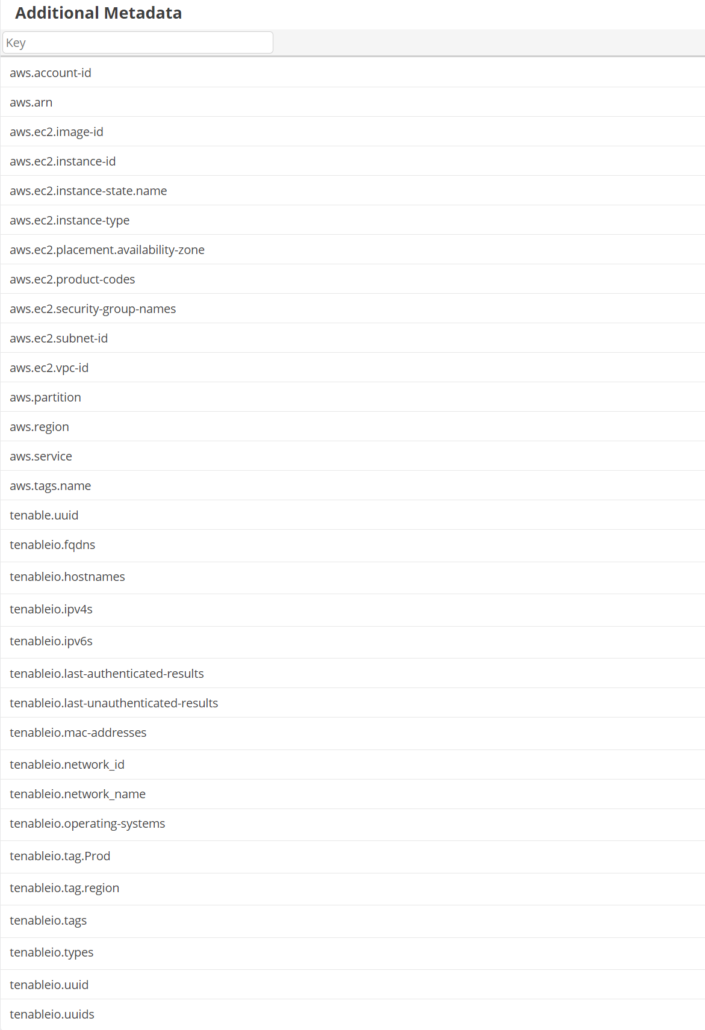
Additional Tenable.io metadata

Say hello to an all-new Tenable.io experience within Nucleus. As part of this significant rework, we introduced a new host asset matching algorithm which will result in better tracking of dynamic asset changes over time and more reliable asset matching across cloud environments. We also increased the speed of scan file downloads and ingests and added additional metadata on assets for asset management, automation, and reporting use cases. Additionally, asset metadata is now populated on ingest instead of separate scheduled ingests specifically for assets. This major Tenable.io connector update, released this past month, significantly improves its functionality, performance, and available metadata moving forward. 

More metadata for Synk, Prisma Cloud, Invicti/Netsparker 
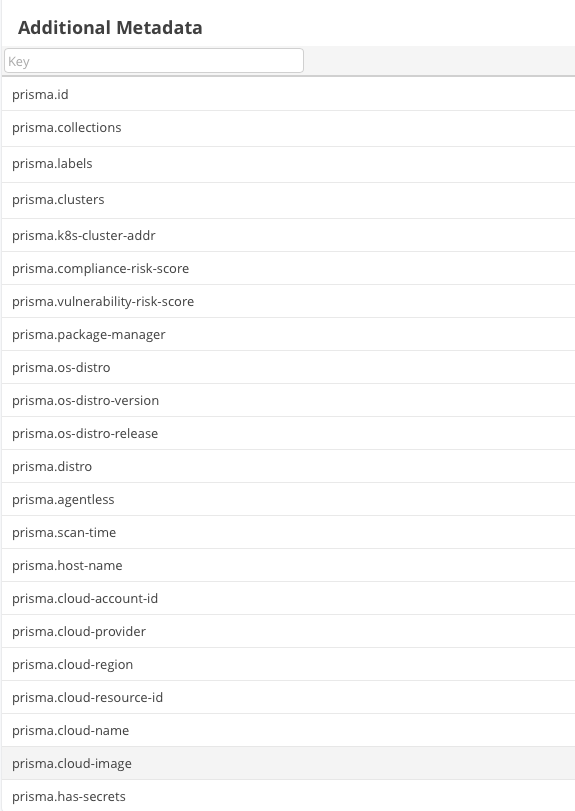
Prisma Cloud Additional Metadata
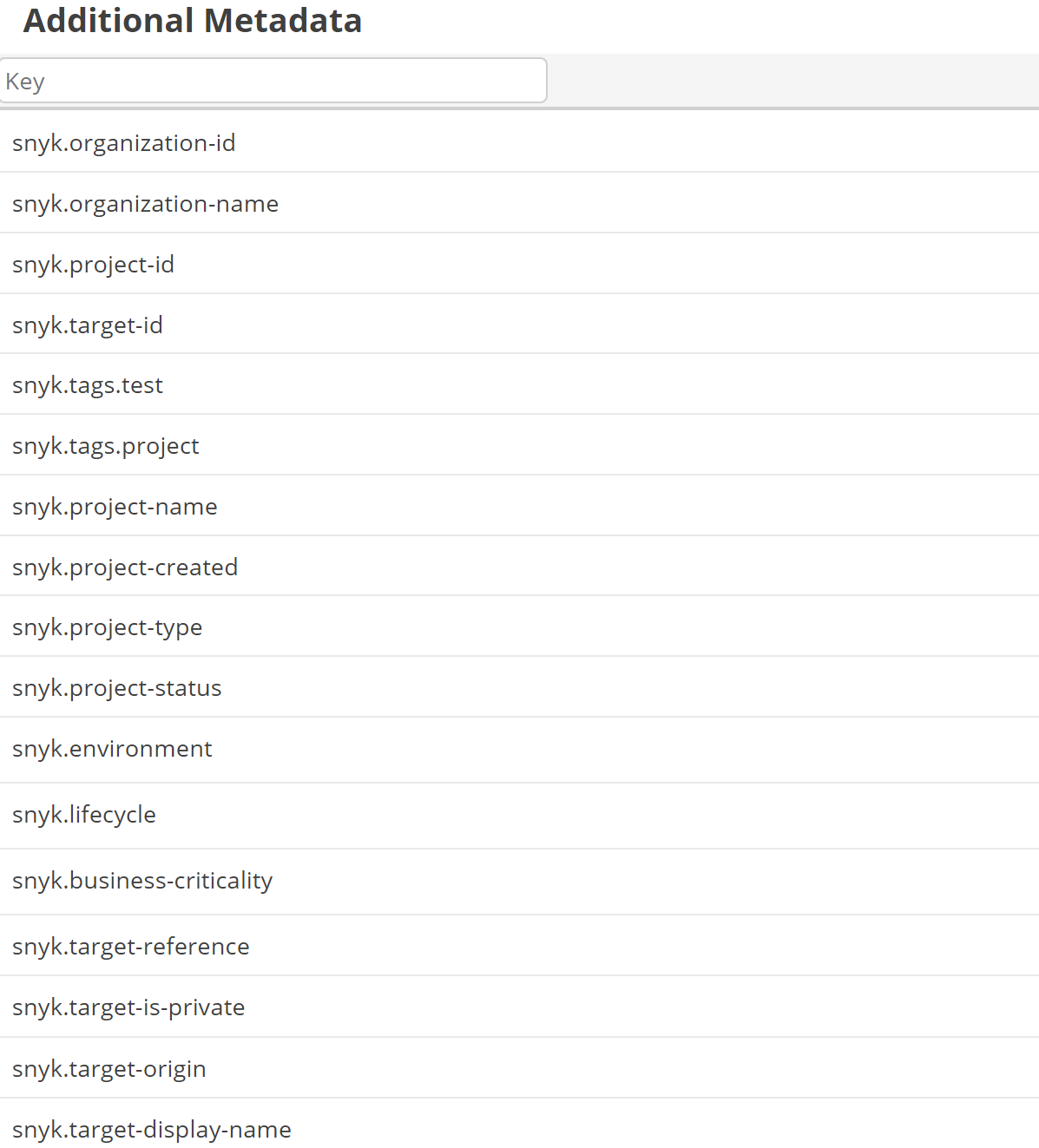
Snyk Additional Metadata
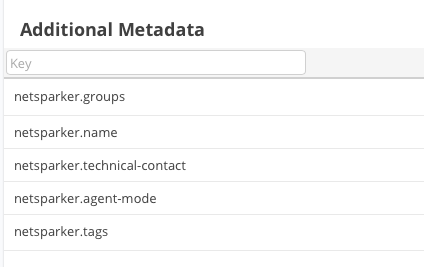
Invicti/Netsparker Additional Metadata

Improved speed and reliability continue to be a big focus for our team. At the same time, bringing more metadata to Nucleus is a priority to support more automation. As part of those efforts, we made multiple metadata additions and enhancements over the past month. For the Snyk connector, we added additional metadata around projects and targets by organization ID. We rewrote the Prisma Cloud connector to implement faster downloads and ingests of scans, and improved the reliability and volume of additional metadata available. We added Invicti/Netsparker tags as additional metadata, supporting more automation. Ongoing connector improvements allow us to make continual progress towards significantly improving your speed, efficiency, and outcomes when using Nucleus. 

Rapid7 updates to align with recent API changes 
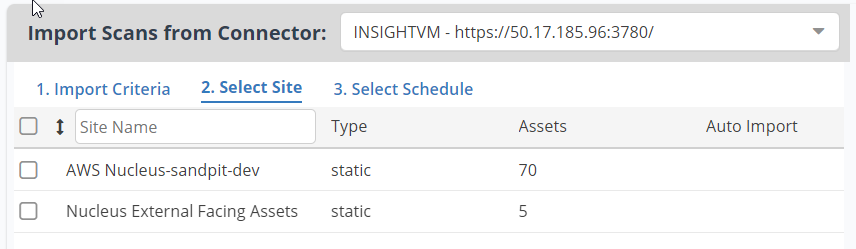
New Select Site Scan option when ingesting Rapid7 scans

Over this past month, we applied several changes to the Rapid7 connector to improve overall performance and introduce more opportunities for automation. We updated ingests to align with changes made to the Rapid7 API and added the ability to select specific site scans when ingesting. We also added the ability to ingest additional operating system details, now available as additional metadata supporting further automation. Additionally, the Rapid7 InsightVM connector now stores and performs asset matching using AWS EC2 metadata, including automatically removing connector-generated reports. All these changes and additions significantly improve your available Rapid7 data in Nucleus, making it even more reliable and valuable for your teams. 

Click here to expand our full Release Notes

You can access the Nucleus change log to view the complete, unedited version of release updates posted each week. Select the subscribe to the RSS feed option on this page if you would like to receive weekly change log updates. This new Nucleus Product Update is intended to fully summarize and outline those weekly changes for you, with more details, each month. The product updates include all the following features and improvements: 

Product Improvements (Performance, Experience, & Functionality) 

  • Added Invicti/Netsparker tags as additional metadata, which can now be used in automation.  
  • Improved speed of the Active Vulnerabilities details page. 
  • Updated API documentation for PUT asset endpoint to include all supported fields. 
  • Added the asset id in the response for the following endpoint: GET /projects/{project id}/findings/details/{finding number}   
  • Improved the worker queue so that jobs run more quickly 
  • Added the ability to add comments to findings via the PUT projects/{project_id}/findings API endpoint. 
  • Improved scan ingestion for some connectors to allow for downloading of scan files whilst other files are being ingested into the project. 

Reporting Improvements 

  • Added source column to the asset management export.    

Integration Improvements 

Checkmarx: 

  • Improved the Checkmarx scan file download job to handle situations where Checkmarx’s report generation silently failed and never returned a report. 

Invicti/Netsparker: 

  • Updated the Invicti/Netsparker connector to ingest data from Acunetix 360 after their headers changed.   

Prisma Cloud: 

  • Sped up ingestion for the Prisma Cloud Connector. 
  • The Prisma Cloud connector has been rewritten to implement faster downloading and ingestion of scans and improve the reliability of additional metadata. This improvement also adds significantly more metadata. 

Qualys: 

  • Updated the Qualys connector to ignore queued scans when auto importing.   

Rapid7 

  • Updated Rapid7 ingestion to align with changes made to their API. 
  • Added the ability to select specific site scans when ingesting from Rapid7. 
  • Added the ability to ingest additional operating system details from Rapid 7, which is also available as additional metadata 
  • The Rapid7 InsightVM connector now stores and performs asset matching using AWS EC2 metadata. This change also includes removing connector generated reports automatically. 

ServiceNow: 

  • Improved speed of the asset sync in the ServiceNow connector. 

Snyk: 

  • Added additional metadata in the SNYK Connector around projects and targets by organization ID. 

Tenable.io: 

  • Major Tenable.IO rework for upgraded functionality, better performance, and additional metadata.  
  • Upgraded functionality: Added better tracking of dynamic assets over time and more reliable asset matching across cloud environments.  
  • Better performance: Significant speed up for scan file downloads and ingestion.  
  • Additional metadata: Added more asset metadata from Tenable.io, now available in asset management and automation. We have made performance improvements to the way that asset metadata is ingested for Tenable.io as well. 

Bug Fixes 

  • Fixed an issue where finding processing rules could not run manually if finding criteria was set to “both” or “compliance.”  
  • Fixed an issue where tags in the interface were not spaced correctly.    
  • Fixed an issue with Acunetix failing to ingest in certain scenarios.  
  • Fixed an issue with false booleans not displaying in the finding reference field. 
  • Fixed an issue where InsightVM was not ingesting new scans. 
  • Fixed an issue where hyphens in metadata did not allow rules to execute. 
  • Fixed an issue where vulnerabilities in an active state were showing in the resolved page in certain edge cases.  
  • Fixed an issue where the Executive Group Comparison report was not saving.  
  • Fixed an issue where unrelated assets were being combined.  
  • Fixed an issue where scheduled reports were losing saved filters after being edited.  
  • Fixed an issue where .bmp files were not uploading correctly in the evidence section.  
  • Updated the GET assets API endpoints to return an empty array if the asset_info is empty, to better align with API documentation 
  • Fixed an issue where the Doesn’t Contain filter in the Asset Management page was not showing assets with no source.  
  • Fixed an issue in the Crowdstrike connector where we were not ingesting additional metadata. 
  • Fixed an issue where ServiceNow asset ingestion failed in limited scenarios. 
  • Fixed an issue where asset group tags were showing as blank in the Asset Management page in certain scenarios. 
  • Fixed an issue in asset processing automation where certain rules had the ability to run out of order in certain cases.  
  • Fixed an issue where mitigated asset note findings were remaining in a mitigated state even though they were active in subsequent scans.  
  • Fixed an issue where ingesting a json scan file with container image data was adding certain container image attributes to unrelated container image data in subsequent scan files.  
  • Fixed an issue where some scheduled Nessus Pro jobs were failing to ingest new scans. 


Click here to review past Nucleus product updates.

Adam Dudley
Adam is VP of Strategy and Alliances at Nucleus Security, working closely with the company's partners and integrations. Adam is also proudly the company's longest-tenured non-founding employee.

See Nucleus in Action

Discover how unified, risk-based automation can transform your vulnerability management.