











Data Overload in the AI Era: Why Aggregation and Prioritization Are Non-Negotiable
The AI Problem Nobody Wants to Admit
AI was supposed to make our lives easier. Vendors promised it would cut through complexity, detect threats faster, and lighten the load on already overworked security teams. But if you’ve been paying attention, you know the truth: AI has given us more noise than ever.
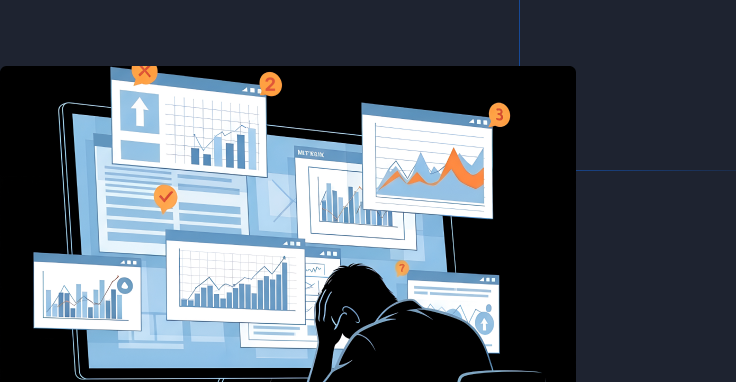
Corey Brunkow from Horizon3.ai joined Nucleus co-founder and CPO, Scott Kuffer, to unpack this problem during a recent webinar. AI helps attackers move faster, but on the defensive side, it’s created a flood of data. Every tool, every scanner, every cloud platform is spitting out findings, vulnerabilities, and insights. Security and IT teams are buried under dashboards and alerts, trying to separate the signal from the noise while the bad guys are already exploiting the gaps.
The paradox is simple: time-to-exploit is shrinking, but time-to-decision is getting longer. And in cybersecurity, that situation can be both inefficient and dangerous.
The AI Effect: Speeding Up the Bad Guys, Drowning the Good Guys
Attackers don’t need to be elite hackers anymore. As Corey pointed out during the conversation, AI is lowering the barrier of entry. Weaponized exploits and tactics that used to take months to develop are showing up in weeks, sometimes days. We’re already seeing ransomware kits that leverage AI to automate discovery and exploitation.
That shift has massive consequences:
- Adversaries scale faster than ever. The skill ceiling for attackers has dropped. What once required expertise now requires a GitHub search and a prompt.
- Exploits evolve in real-time. Misconfigurations, privilege escalation paths, and vulnerabilities are being weaponized as soon as they’re disclosed.
- Defenders’ windows are closing. You don’t have weeks or months anymore. In many cases, you’ve got days to act before an exposure is automated into the next attack kit.
And yet, defenders are stuck under a mountain of alerts. According to Scott, “There's a ton of alerting that gets thrown your way, and even if you spread that across your entire business or organization, it still becomes kind of overwhelming and very difficult to do anything with.”
Vendors tout AI-driven detection, but the result is just more dashboards, more alerts, and more pressure on already stretched teams. Instead of clarity, we’ve created a data overload problem at exactly the moment we can least afford it.
Why Aggregation Matters (and Why Most Teams Do It Wrong)
Here’s the uncomfortable truth: most organizations don’t have a complete picture of their exposures.
Every tool is a silo. Your vulnerability scanner shows you one “truth.” Your cloud security posture tool shows another. Your pen test reports tell a different story. Add endpoint telemetry, SaaS security findings, and attack surface management feeds, and suddenly your “single pane of glass” is just a collection of disjointed windows.
This is where aggregation comes in, and why most teams fail at it. Too many organizations equate aggregation with “dumping everything into a central place.” That’s not aggregation; that’s copy-paste chaos. As Corey points out, “It's critical ... aggregating good data, useful data, and then prioritizing that to take action swiftly, because at the speed of AI, you're going to be exploited before you know it.
Aggregation isn’t just about collecting data in one place. It’s about understanding. That means deduplicating, applying business context, and connecting dots between low-severity issues that form critical attack paths. Aggregation requires:
- Normalization: Remove duplicates, reconcile conflicts, and weed out the garbage. If the same vulnerability shows up in three tools with three different IDs, you need one canonical record, not three.
- Contextualization: Map findings to your business. A misconfiguration in a test environment is not the same as one in a production system that runs customer transactions.
- Correlation: Understand how issues connect. A “low” in one tool and a “medium” in another might add up to a critical attack path in reality.
Prioritization: The Only Way to Survive the Flood
Even with good aggregation, you still can’t fix everything. This is where prioritization becomes existential.
The old CVSS-driven “fix everything rated 7.0 or higher” approach doesn’t cut it anymore. AI-driven adversaries aren’t waiting for your patch cycles. You need a smarter way to decide what actually matters.
A modern prioritization strategy requires multiple lenses:
Exploitability
Is there any active chatter in attacker forums? Has a proof of concept been released? Are ransomware groups already weaponizing it? In the webinar, Corey made the point that AI is accelerating exploit development. The result: your window to patch shrinks dramatically once weaponization begins.
Asset Criticality
Not every system is equal. Prioritization requires business context: What’s the revenue impact if this goes down? What’s the compliance risk if it’s compromised? Criticality isn’t static either. A vulnerability in your payment system in December, when transactions are at their heaviest, carries more weight than the same vulnerability in April when sales have slowed.
Internet Exposure
Attackers don’t waste time guessing where to start. They’ll hit what’s easiest to see. If an exposure is directly accessible from the internet, it belongs at the top of the list. During the webinar, we highlighted that defenders often overlook this simple truth: if it’s exposed, it’s exploitable and it’s faster than you think.
The bottom line: if your team can’t answer “What should we fix first?” in under five minutes, you don’t have a prioritization strategy. You have noise.
The Non-Negotiable Future: Automation with Human Oversight
Aggregation and prioritization are no longer optional. They are survival.
Manual processes cannot keep pace with AI-driven exploitation. At the same time, blind trust in automation is a recipe for disaster. Too many vendors want you to believe AI will magically solve your problems. It won’t.
The future belongs to organizations that get the balance right:
- Automation handles the scale problem — collecting data, correlating exposures, scoring risk, and opening tickets without human bottlenecks.
- Humans handle judgment — aligning remediation with business priorities, validating high-stakes calls, and making decisions about acceptable risk.
This balance is how you cut through the noise and keep your teams focused on what actually matters.
Closing Reflection
Nucleus was not founded because the industry lacked tools. It was because those tools buried practitioners in endless alerts and spreadsheets while critical vulnerabilities slipped through the cracks. AI hasn’t changed that reality. It’s only made it more urgent.
Defenders don’t have the luxury of sifting through noise anymore. Aggregation and prioritization aren’t just best practices; they are the line between getting ahead of AI-driven threats or drowning under the weight of your own data.
The choice is simple: cut through the chaos, or get buried by it.

See Nucleus in Action
Discover how unified, risk-based automation can transform your vulnerability management.