









NUCLEUS GUIDE
Essential Guide to Exposure Assessment Platforms
Understand the role Exposure Assessment Platforms play in building a holistic CTEM program.

Turn Data Chaos Into Measurable Risk Reduction
Enterprises and government agencies are facing an unprecedented expansion of their attack surface, with new exposures encompassing additional layers of complexity that traditional vulnerability management simply cannot address. At the center of this transformation lies a new enabling technology: Exposure Assessment Platforms (EAPs).
These platforms unify fragmented data from hundreds of siloed tools, enrich it with threat intelligence and business context, and operationalize it across teams to automate remediation and compliance. This blog covers the shift from vulnerability management to exposure management and how EAPs enable organizations to address exposure risks continuously and effectively, at scale.
Key Highlights

Exposures Extend Beyond Vulnerabilities
Exposures encompass misconfigurations, identity weaknesses, third-party dependencies, and other vectors that collectively expand the attack surface and increase the likelihood of exploitation.

The Future of Exposure Management
Gartner defines CTEM as the future of exposure management, where EAPs assist organizations in scoping, discovering, prioritizing, validating, and mobilizing responses to exposures continuously across the enterprise.

Closing the Data-Intel-Action Gap
EAPs close the long-standing data-intel-action gap, transforming overwhelming, fragmented security findings into normalized, contextualized, and automated workflows that drive measurable remediation outcomes.

Redefining Prioritization
AI and advanced threat intelligence are redefining prioritization, using real-time exploitability data and business context, powered by AI assistants, to provide detailed insights about exposure risks.

Compliance is Accelerating Adoption
Frameworks like FedRAMP, NIST, ISO2700X and others now require continuous visibility, SLA tracking, POA&M reporting, and verifiable exposure management practices.

Leaning on Reliable Automation
The future of exposure management lies in reliable automation, where generative AI, predictive analytics, and contextual insights converge to deliver self-guided, proactive exposure risk reduction at scale.
What is an Exposure Assessment Platform?
An Exposure Assessment Platform is a central fabric for aggregating, normalizing, deduplicating, and operationalizing all exposure data (vulnerabilities, misconfigurations, controls, SaaS, OT). EAPs enable organizations to continuously identify and prioritize exposures, including vulnerabilities and misconfigurations, across a broad range of assets.
To add further context, an exposure represents any condition, weakness, or circumstance that could increase the likelihood of a threat impacting your organization. While not every threat relies on a traditional vulnerability to be exploited, every exploitable vulnerability contributes to your overall exposure to risk. Addressing exposures rather than focusing solely on vulnerabilities is critical because exposures represent the full spectrum of conditions that adversaries can exploit.
For instance, according to Gartner (Quick Answer: What Threat Exposure Management Product Leaders Should Know About EAP and AEV, 2024), exposures are not limited to patchable vulnerabilities; they also include misconfigurations, security control gaps, leaked credentials, and other digital threats across the modern attack surface. In short, anything that expands your attack surface and could be leveraged by an adversary should be considered an exposure.
A common misconception is that Exposure Assessment Platforms replace scanners, CAASM, ASPM, EASM, or RBVM tools. In practice, EAPs rely on these tools as data sources. The distinction lies in their purpose: scanners and point solutions tell you what exists, while an EAP tells you what matters.
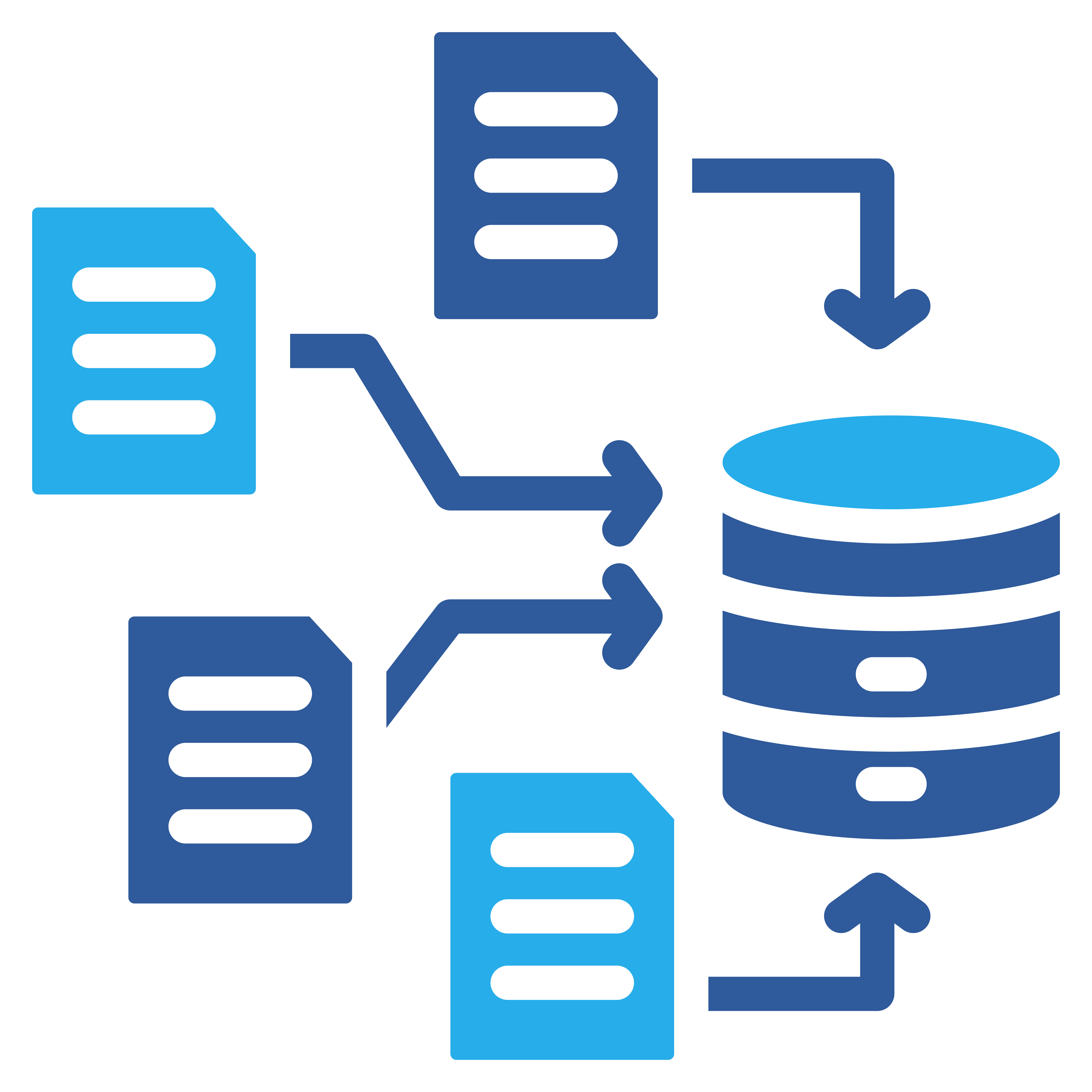
An EAP ingests fragmented, noisy, and often duplicative findings from across these tools, then normalizes and deduplicates the data to create a unified view of assets and exposures. Unlike point tools that focus on one layer of the attack surface, an EAP serves as a unifying fabric that spans them all.
Its function is not to generate findings, but to reconcile and operationalize them, linking vulnerabilities, misconfigurations, asset intelligence, and business context into a single source of truth for exposure management. Most importantly, a key differentiator between EAPs and Risk-Based Vulnerability Management (RBVM) tools that also incorporate business context and threat intelligence is their scope: EAPs unify data beyond just vulnerabilities, including misconfigurations, controls, and external dependencies.
Key Outcomes When Using an EAP
- Unify all tools into a single source of truth for assets and exposures.
- Enrich exposure data with business context and threat intelligence.
- Operationalize exposure data to automate remediation and compliance at scale.
Why Are EAPs Relevant Today?
The relevance of EAPs has never been greater, as enterprises now operate across cloud, SaaS, on-premises, OT, and third-party ecosystems where each layer of the attack surface is expanding, and exposures can surface at any layer, at any time.

The Shift Toward EAPs
Three main forces are driving the shift toward EAPs: volume, velocity, and variety.

Volume
Enterprises manage thousands of assets across cloud, SaaS, IoT, and partners, creating millions of alerts that siloed or manual approaches cannot remediate at scale.

Velocity
New vulnerabilities, zero-days, and attack techniques appear every day, demanding continuous, real-time assessment instead of outdated point-in-time processes. For example, Mandiant’s M-Trends 2025 Report shows that within just two weeks of CVE-2024-3400 being published, over a dozen threat groups like RANSOMHUB were exploiting it in the wild for remote command injection. The speed of exploitation after disclosure reinforces the need for continuous, automated exposure assessment instead of point-in-time snapshots.

Variety
Threats today exploit more than just patchable vulnerabilities, targeting misconfigured identities, unmanaged SaaS, compromised credentials, and other organizational security gaps. To exacerbate the problem, the complexity of securing the organization multiplies exponentially in hybrid and multi-cloud environments, as it introduces ephemeral assets and new attack path possibilities.
Addressing the Data-Intel-Action Gap
Security leaders often believe adding more tools will solve these challenges. However, the reality is different: security teams are overwhelmed by millions of findings, endless threat feeds, and scanner results that rarely translate into tangible outcomes. What looks like progress on the surface (more data, more capabilities) often makes things worse: organizations end up with a data-intel-action gap, the disconnect between identifying risks and effectively addressing them at scale.
To exacerbate the problem, the gap widens even further because threat intelligence is often siloed, unprioritized, or disconnected from remediation workflows. For example, threat feeds may highlight which vulnerabilities are being actively exploited in the wild, but without context on the asset’s criticality, business impact, or existing controls, teams struggle to translate that signal into action.
“Vulnerability program history teaches us that relying solely on tools creates inevitable diagnostic fatigue and lacks business context for relevant prioritization or successful remediation.”
Gartner, How to Grow Vulnerability Management Into Exposure Management, 2024
As a result, the industry is evolving toward Continuous Threat Exposure Management (CTEM), a unified framework that closes the data-intel-action gap by turning findings into prioritized actions that reduce risk across the organization.
Evolving Toward Continuous Threat Exposure Management (CTEM)
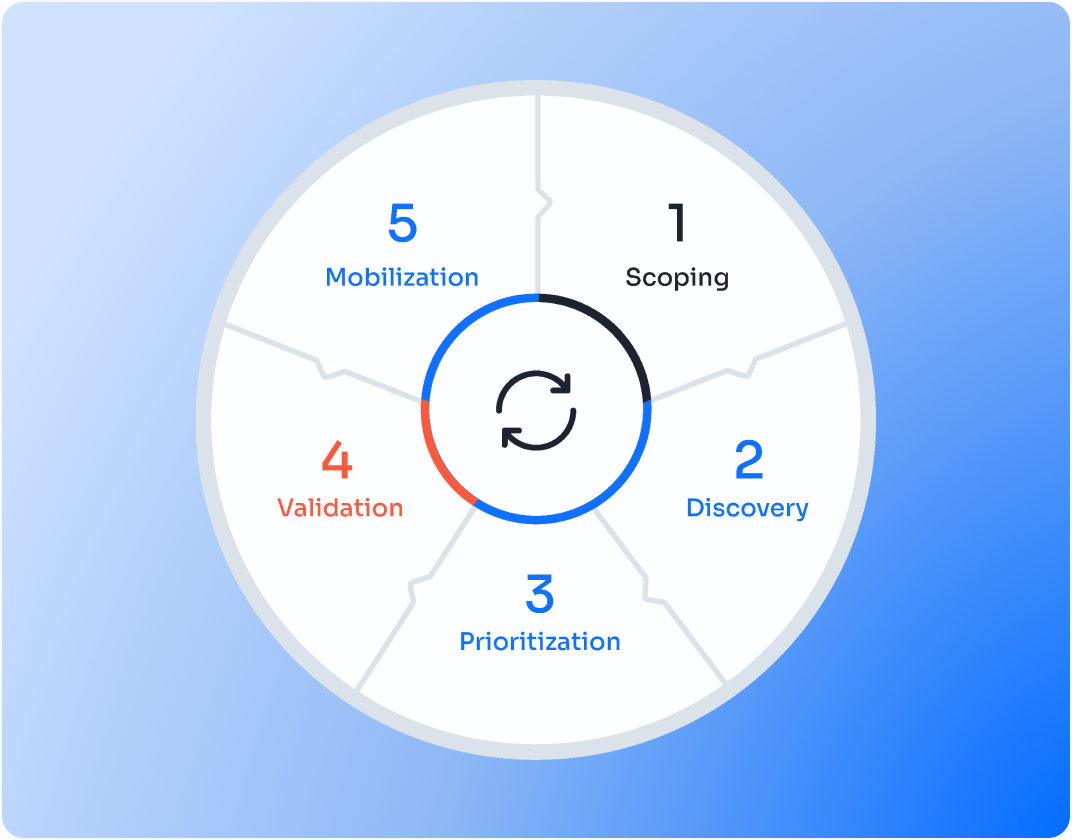
At its core, CTEM is a continuous cycle framework that enables organizations to measure and reduce exposure across evolving environments. Gartner defines this cycle in five stages:
- Scoping – Define the attack surface based on business-critical assets.
- Discovery – Continuously identify exposures across visible and hidden assets.
- Prioritization – Prioritize exposures based on exploitability, criticality, threat intelligence, and business context.
- Validation – Confirm the exploitability and feasibility of attack scenarios.
- Mobilization – Drive cross-team action with workflows, ownership, and clear reports.
A key lesson from the history of vulnerability management is that point-in-time assessments are no longer effective. For example, snapshot audits, quarterly pen tests, or static scanner reports only create an illusion of security in environments that evolve every hour. To address this, CTEM relies on two complementary technology categories that work together to close the loop, turning fragmented data and noise into effective program outcomes:
Exposure Assessment Platforms
EAPs unify findings across tools and continuously identify exposures across diverse asset classes, providing organizations with a unified view of risk. Key questions include:
- What assets do I have, and which are most critical to the business?
- Where am I exposed (vulnerabilities, misconfigurations, threats), and how severe are those risks?
- How should I prioritize and manage these exposures across my environment?
Adversarial Exposure Validation
AEVs simulate or replicate real-world attacks to validate whether exposures can actually be exploited in practice. Key questions include:
- Which identified exposures are real and exploitable in practice?
- Can existing controls, people, and processes defend against these attacks?
- What business processes would be impacted, and how would the organization respond effectively?
The Mandatory Inputs: Exploitability, Asset Criticality, and Business Impact
When comparing exposures, clearly some matter more than others. For instance, a low-severity bug on a lab server is irrelevant compared to a misconfigured identity tied to sensitive data in production. Yet, traditional vulnerability management programs still treat findings in isolation, relying on generic scores and assessment algorithms that fail to capture real business risk.
CTEM captures three mandatory inputs:
- Exploitability – Is the issue being targeted or weaponized in the wild?
- Asset criticality – How important is the asset to operations, revenue, or trust?
- Business impact – What would exploitation mean for compliance, operations, or customers?
The Role of AI and Threat Intelligence

Aside from the business context, which provides an inside-out view of risks, organizations must also factor in threat intelligence to account for external, real-world risks. Some EAPs even take this further by ingesting intelligence from both commercial and government sources. The latter is particularly valuable for federal agencies and defense, where secure or mission-specific feeds must be operationalized to protect sensitive environments. However, while collecting intelligence is relatively easy, acting on it at scale is not. Gartner warns that many vulnerability programs collapse under “diagnostic fatigue” because findings remain siloed, unprioritized, or disconnected from workflows. CTEM addresses this by ensuring that threat intelligence flows directly into scoring models, ownership routing, and SLA logic.
Generative AI acts as an enabling technology to accelerate progress toward operationalizing intelligence data. AI can automatically summarize critical exposure attributes as soon as new threats emerge, answering high-impact questions like:
- Is this vulnerability exploitable?
- Is it already being exploited in the wild?
- Does a proof-of-concept or exploit exist?
- Could it affect OT or ICS systems?
Ultimately, these AI-augmented insights enable security teams to respond more quickly, with intelligence that becomes finally actionable, thereby closing the intel-to-action gap.
Exposure Assessment Platform Frequently Asked Questions
What makes an Exposure Assessment Platform (EAP) different from a traditional vulnerability management solution?
An EAP is the unifying fabric across your attack surface: it aggregates, normalizes, and deduplicates findings from scanners and posture tools, then operationalizes them with business context, ownership, SLAs, and automation. Scanners tell you what exists; EAP platforms like Nucleus tell you what matters, who owns it, and how to fix it at scale.
How do EAPs support Continuous Threat Exposure Management (CTEM)?
EAPs work as the backbone of CTEM, along with AEVs, powering each stage of the cycle:
- Scoping with business-aligned asset views.
- Discovery via automated ingestion from scanners, CSPMs, EDRs, and SaaS tools.
- Prioritization with customizable scoring models that include exploitability, asset criticality, and business impact.
- Validation through adversarial exposure validation integrations.
- Mobilization with ITSM/DevOps orchestration that routes ownership and enforces SLAs.
Why are normalization and deduplication critical for exposure management at scale?
Without normalizing data and removing duplicates, organizations drown in noise. Normalization translates different tool outputs into a common schema, and deduplication collapses repeat findings into one record. This ensures clean, trusted data that drives accurate reporting, faster ownership, and more efficient remediation. EAPs like Nucleus use normalization and deduplication methods that collapse duplicate findings (the same CVE reported by multiple scanners) into a single actionable record.
What tools can an EAP integrate with?
Modern EAPs integrate broadly across the security and IT stack: vulnerability scanners, CSPM/CIEM, EDR/XDR, CMDBs, ITSM/DevOps platforms, code analysis tools, and external threat intelligence feeds. The ultimate goal is to aggregate and operationalize everything into one central exposure fabric.
How does an EAP factor in risk?
Each EAP factor determines risks differently. For context, Nucleus developed its own Risk Score model (0–1000 scale) that combines CVSS, EPSS, KEV status, exploit maturity, asset sensitivity, and business context. The score is customizable and updates dynamically as new data arrives, ensuring risk prioritization reflects real-world conditions and the organization’s specific environment.
Can I customize the prioritization models within an EAP to match my organization’s risk models?
Yes. Leading EAPs allow customization of weights, attributes, and thresholds so organizations can align scoring to their risk appetite, compliance needs, and business priorities.
Can an EAP map vulnerabilities and exposures to the MITRE ATT&CK framework?
Yes. For example, Nucleus maps vulnerabilities to MITRE ATT&CK techniques via CVE-to-TTP correlations and threat intel enrichment. This allows customers to align exposures with adversary behavior, prioritize based on likely attack paths, and integrate ATT&CK into dashboards, reporting, and automation. ATT&CK mappings also support executive reporting and purple team use cases by connecting technical risk to attacker tactics.
How do EAPs handle ephemeral assets and cloud-native environments where workloads constantly change?
The more advanced EAPs include the ability to continuously ingest cloud and container data, correlate transient identifiers to persistent asset records, and auto-close stale findings tied to terminated workloads. This ensures visibility remains accurate in elastic, cloud-native environments.
How does exception management work in an EAP (e.g., risk acceptance, temporary suppressions)?
Exception management is granular, auditable, and time bound. Users can record compensating controls, assign expiration dates, and require recertification. Within Nucleus, exceptions are never “set and forget.” They are tied to governance workflows to prevent risk blind spots.
What role does AI play in enhancing prioritization and remediation within an EAP?
Overall, artificial intelligence is an accelerator for decision-making rather than a black box. AI helps summarize threat attributes, correlate intel with business context, create insights, and generate executive-friendly reporting. This shortens the gap from intel to action.
How do EAPs support compliance with frameworks like FedRAMP, NIST, PCI, CMMC, and GDPR?
EAPs simplify and accelerate compliance by keeping remediation records, SLA tracking, and exception logs in one place. Rather than facing audits unprepared, organizations can generate reports on demand, whether that’s a POA&M for FedRAMP, or proof of ongoing remediation for NIST, PCI DSS, CMMC, GDPR, or any other framework.
How do EAPs ensure secure storage, encryption, and data sovereignty across regions?
EAPs ensure these factors hrough encryption (in transit and at rest) and strict access controls, which are built in by default. Most vendors also offer regional hosting, private SaaS, or even on-premises deployments, so organizations can meet sovereignty and residency requirements without sacrificing functionality.
What deployment options are available for EAPs?
Generally, deployments can be hosted in cloud environments like AWS, AWS GovCloud, or GCP, or set up in a customer-hosted model that runs on your own hardware or in any public or private cloud that meets the technical requirements. Some platforms even support a two-sided deployment model, where sensitive data is ingested from an air-gapped environment, while reporting and remediation activities take place in a connected environment.
See Nucleus in Action
Discover how unified, risk-based automation can transform your vulnerability management.