



















KNOWLEDGE CENTER
What is CISA BOD 26-04?
Federal agencies are facing a practical vulnerability management problem: the number of security updates continues to grow, but not every vulnerability carries the same operational risk.
CISA’s Binding Operational Directive 26-04, Prioritizing Security Updates Based on Risk, gives Federal Civilian Executive Branch agencies a more structured way to decide which vulnerabilities require the fastest action.
The directive shifts the focus from treating every patch as equally urgent to prioritizing vulnerabilities based on risk signals that are more closely tied to exploitation potential and agency exposure. CISA BOD 26-04 creates a clearer process for deciding which vulnerabilities must move first when remediation capacity is limited.
What CISA BOD 26-04 Requires
CISA BOD 26-04 directs agencies to prioritize vulnerability remediation using four criteria:
- Does the vulnerability affect a publicly exposed asset?
- Can exploitation be fully automated?
- Would exploitation allow an attacker to take control of a system?
- Is there evidence of active, real-world exploitation?
A vulnerability that meets all four criteria must be fixed within three days. Agencies must also perform forensic triage to determine whether affected systems may have already been compromised.
The directive also establishes implementation milestones. Agencies must immediately update vulnerability management policies, including processes for ongoing remediation of vulnerabilities in CISA’s Known Exploited Vulnerabilities catalog. Within 60 days, agencies must update their remediation processes for common vulnerabilities. Within 180 days, agencies must be operating against the remediation timelines defined by the directive.
Why Is CISA Changing Vulnerability Prioritization?
Traditional vulnerability management programs often rely heavily on severity scores or vendor patch cycles. Those inputs are still useful, but they do not always reflect which vulnerabilities are most likely to be used in an attack or which assets would create the greatest agency risk if compromised.
CISA’s directive reflects a more risk-based model. Public exposure, automation potential, system control, and known exploitation are practical indicators that a vulnerability may be more likely to become an incident. The directive is also shaped by CISA’s concern that artificial intelligence is shortening the time between vulnerability discovery and weaponization.
For agencies, this means patching decisions need to be based on more than a static severity rating. Teams need to understand where a vulnerability exists, whether the affected asset is exposed, how the vulnerability can be exploited, and whether threat actors are already using it.
The Agency Impact of BOD 26-04
BOD 26-04 creates several operational requirements for federal agencies.
Asset Context
First, agencies need accurate and reliable asset context. A vulnerability cannot be prioritized accurately if the agency does not know whether the affected asset is internet-facing, business-critical, or connected to sensitive systems.
Threat Intelligence
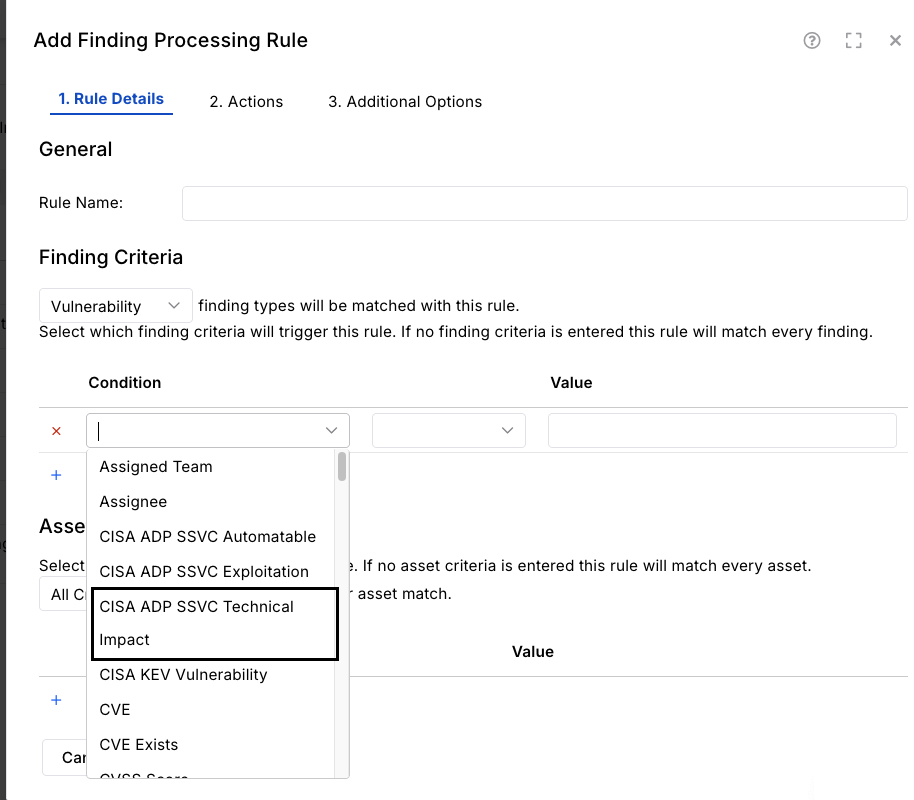
Second, agencies need a consistent way to connect vulnerability data with threat intelligence. Known exploitation, exploitability, and automation potential need to be available in the same workflow where teams make remediation decisions.
Remediation Processes
Third, agencies need remediation processes that can support different urgency levels. A three-day deadline for the highest-risk vulnerabilities requires coordination across security, IT operations, system owners, and incident response.
Defensible Reporting
Finally, agencies need defensible reporting. BOD 26-04 makes prioritization a governance issue, not just a technical queue. Agencies must be able to explain why certain vulnerabilities were remediated first and show progress against CISA-defined timelines.
What BOD 26-04 Means Beyond Federal Agencies
Binding Operational Directives apply to Federal Civilian Executive Branch agencies, but CISA often encourages state, local, and private-sector organizations to use these directives as guidance.
For non-federal organizations, BOD 26-04 is a useful signal for how vulnerability management expectations are evolving. Security teams are being pushed toward risk-based remediation programs that account for exposure, exploitability, and known adversary behavior.
This is especially relevant for organizations that support government agencies, operate critical infrastructure, or need to demonstrate disciplined cyber risk management to regulators, boards, or customers.
Staying Ahead of Risk-Based Security Update Requirements
CISA BOD 26-04 does not change the basic goal of vulnerability management: reduce the likelihood that known weaknesses are used against the organization. What changes is the level of precision expected in deciding what gets fixed first.
For agencies and organizations building mature exposure management programs, the directive reinforces the importance of:
- Centralized vulnerability and asset data
- Continuous enrichment with threat intelligence
- Risk-based prioritization workflows
- Clear remediation ownership
- Timely reporting and auditability
The organizations best positioned to meet BOD 26-04 requirements will be those that can connect vulnerability findings to real-world risk and operationalize remediation decisions quickly.
Watch a Demo Today
Learn more about the Nucleus Unified Vulnerability Management platform right away.
Watch our in-depth, on-demand demo to see us in action.