







LAUNCH WEEK 2025 | DECEMBER 4, 2025
Nucleus MCP Server
Connecting Nucleus with your AI Tools of Choice
Rob Gibson
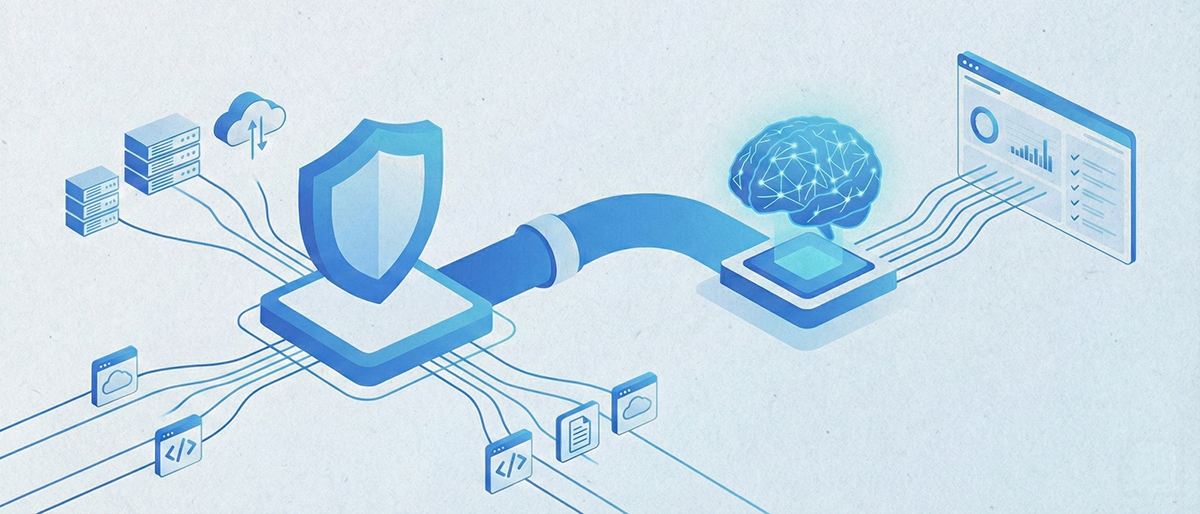
It’s no secret that security teams are drowning in vulnerability data, and the gap between detection and action keeps widening. That’s why Nucleus is introducing the MCP Server: a new way to let your AI tools securely interact with your vulnerability data in real time.
The Nucleus MCP Server brings AI-powered workflows directly into your Nucleus environment, enabling seamless communication between your security data and any AI system that supports the Model Context Protocol (MCP). But it’s more than just an integration. Nucleus MCP gives security teams a new way to ask questions, prioritize risk, and execute workflows in real time, using their own data.
From Data to Decision: Why MCP Matters
Today, many AI implementations in cybersecurity are limited to superficial UI-level use cases. We believe that users deserve more control and the ability to use AI with full, programmatic access to security data. Rather than just as an assistant, AI will become an intelligent decision-making engine. We built the Nucleus MCP server with this in mind.
The Nucleus MCP Server lets your AI (whether it’s ChatGPT, Claude, or another system) ask Nucleus for answers using natural language. Your AI can pull risk data, generate reports, or propose fixes using near real-time findings from your Nucleus environment.
Unlike AI copilots bolted onto a single tool, Nucleus MCP treats AI as a user of your entire security stack, securely interfacing with Nucleus through structured APIs, access controls, and your existing roles and permissions.
Security analysts and developers can go from queries like, “What’s the riskiest exposure in our production environment?” to a clear, actionable answer with no pivoting between tools or data exports. Furthermore, Nucleus MCP aligns with the increasingly prevalent Continuous Threat Exposure Management (CTEM) model by enabling continuous risk assessment, prioritization, and response, with AI accelerating each stage of the cycle.
Real Use Cases: AI in Action Across the Security Lifecycle
By connecting the Nucleus data model to AI systems through Nucleus MCP, customers can create smarter, faster workflows across their security programs. Here’s how:
1. Remediation Planning with AI
Instead of manually analyzing complex information, users can jumpstart their planning with an AI prompt. For example:
“Generate a 90-day remediation roadmap for my organization.”
Your AI pulls findings, asset data, and trends from Nucleus, then outputs a plan prioritized by risk and business context.
2. Reporting and Visualization On-Demand
Users can combine information from Nucleus in user and organization-specific ways, for example:
“Show me our top five risk trends this quarter.”
“Compare remediation velocity across projects.”
AI can now generate, visualize, and deliver reports from Nucleus without touching the UI, thereby freeing analysts to focus on insights instead of manual work.
3. Developer Workflows in IDEs
Shifting left only works if developers don’t have to chase security data. With Nucleus MCP, AI can bring vulnerability context straight into their IDE:
A developer asks inside VS Code: “Are there any known vulnerabilities in this repo?”
Nucleus responds with real-time context pulled through the AI, flagging issues before you deploy code.
4. Cross-System Automation
Early adopters are testing integrations that connect Nucleus to SIEM alerts, ticketing platforms, and risk models. AI can act as the glue, correlating alerts, creating tickets, and tracking remediation across systems.
This turns Nucleus into a real-time security intelligence hub, tailored to each team’s workflows.
How It Works: Simple, Secure, Seamless
- Use an MCP-Compatible AI Tool: Choose an AI client like ChatGPT, Claude, Augment, or any other that supports MCP.
- Connect via Your Instance URL: Enter https://[your-instance]/nucleus/mcp and follow the authentication steps.
- Prompt Naturally: Your AI acts on behalf of the authenticated user, governed by existing Nucleus API permissions.
- Stay Secure: Nucleus MCP enforces all role-based and asset group access control settings. Users see only what they’re authorized to access.
At launch, Nucleus MCP will support access to asset and vulnerability data, with more capabilities coming soon.
A New Standard for AI-Driven Security
What sets Nucleus MCP apart is that it’s not just another embedded AI assistant. It’s an open, secure protocol that turns your existing AI into a control layer for your security data and workflows. In this system, you control the tools, the context, and the prompts, with Nucleus providing the structured data foundation.
Nucleus MCP isn’t just integrating AI, it’s creating a secure foundation for AI-native security operations. That means faster decisions, fewer silos, and a more intelligent response to risk.
The teams that embrace AI won’t just keep pace; they’ll set the pace. And with Nucleus MCP, they’ll do it on their terms.