









Why This Wiz Recognition Matters to Us at Nucleus
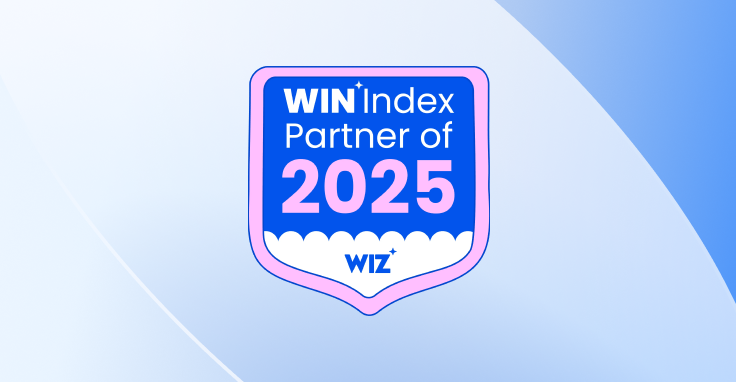
Today, Wiz recognized Nucleus in its 2025 Partner Index as one of the most popular new integrations built in 2025. That recognition matters to us because of how the Partner Index is constructed. Wiz, a leading cloud security platform, highlights integrations based on customer adoption and usage, reflecting which integrations customers are actively enabling and relying on in their environments.
That framing connects directly to why we started Nucleus in the first place.
When we first began building Nucleus, it was immediately clear that we were not stepping into a small or neatly bounded problem. What we were reacting to still feels systemic. Security teams are surrounded by capable tools and talented people, yet outcomes rarely reflect the effort being applied. Every system produces its own view of risk; every team develops its own prioritization logic, and an enormous amount of time is spent reconciling data across tools instead of reducing exposure in a meaningful way. I continue to see this pattern repeat itself, and if anything, it feels like it is getting worse rather than better.
What stood out to us early on was that while the industry focused heavily on solving individual point problems like CVE prioritization, triage, or false positive management, very little attention was paid to how all those systems were meant to work together once they were deployed. The harder problem was not any one signal; it was the lack of a connective layer that allowed tools, data, and business processes to operate together at scale.
We still see the same pattern play out. Strong signals exist, but they live in isolation. Ownership is fragmented. Decisions that should be straightforward slow down because there is no shared context to anchor them. The challenge is rarely about intelligence or intent. It is about coordination.
That realization shaped a core belief we have carried with us from the beginning. Security outcomes improve when systems are designed to share context, speak a common language, and reflect how teams actually work across tools and functions, rather than forcing everything into a single environment.
You can see a version of this dynamic in foundational infrastructure like the NVD. Despite its imperfections and recent challenges, it continues to exist because the industry depends on a common reference point. No single organization owns it, and progress depends on participation and ongoing use rather than control.
That belief has influenced how we built Nucleus. We never set out to create a walled garden or a platform designed to keep data confined to one place. We believe customers should be able to use their data wherever it is most useful, because that flexibility is what enables real automation. Platforms that try to hold everything inside their own environment often limit the very outcomes they claim to support.
Which brings me to partnerships, integrations, and why usage matters.
Partnerships Are Easy, Usage Is Not
Partnerships are everywhere in security. Every company has them, logos multiply quickly, and ecosystems look impressive in presentations. On paper, the industry appears highly connected.
The day-to-day experience tells a different story.
Many partnerships never change how teams actually operate. Integrations get built but never make it into production workflows, or they require enough manual effort that teams quietly stop using them. The ecosystem grows, but the work does not get much easier.
This is how integration theater takes shape. The existence of an integration starts to stand in for impact, even when there is little evidence that it plays a role in real decision-making.
Usage is harder to earn. It requires alignment across data models, workflows, ownership, and incentives. It forces products to adapt to existing operating models instead of asking teams to reorganize around them. Over time, usage becomes the clearest indication of whether something is actually delivering value.
The Market Is Voting with Its Integrations
Understanding what security teams value does not require reading announcements. It shows up in what they choose to connect and rely on once systems are live.
Buyers increasingly gravitate toward tools that fit cleanly into how work already happens. When an integration becomes part of daily prioritization and remediation workflows, it reflects trust built through repeated use. Tools that remain disconnected tend to stay peripheral, regardless of how strong they appear in isolation.
When teams operationalize an integration, they are making a quiet but meaningful decision about where value compounds over time. Those decisions shape security programs gradually, through everyday use, rather than through moments of visibility.
This is why Wiz’s recognition matters to us. The Partner Index reflects customer adoption, not intent. Being recognized as one of the most popular new integrations points to how teams are choosing to incorporate Wiz data into Nucleus as part of their broader exposure management workflows.
That signal tells us we focused on the right problem.
Continuing to Build Toward Better Security
From the beginning, our belief has been that security outcomes improve when coordination replaces isolation and when systems are designed to work together in the real world. That belief continues to guide how we build, how we partner, and how we measure progress.
The market is steadily reinforcing that direction. Integrations that become part of daily work are the ones that matter, and systems that help teams operate across tools will continue to outperform those that try to contain everything inside their own walls.
That is the direction we see the industry moving, and it is the direction we intend to keep building toward.

See Nucleus in Action
Discover how unified, risk-based automation can transform your vulnerability management.