









The CISO’s Challenge: Mapping Vulnerabilities to Business Risk
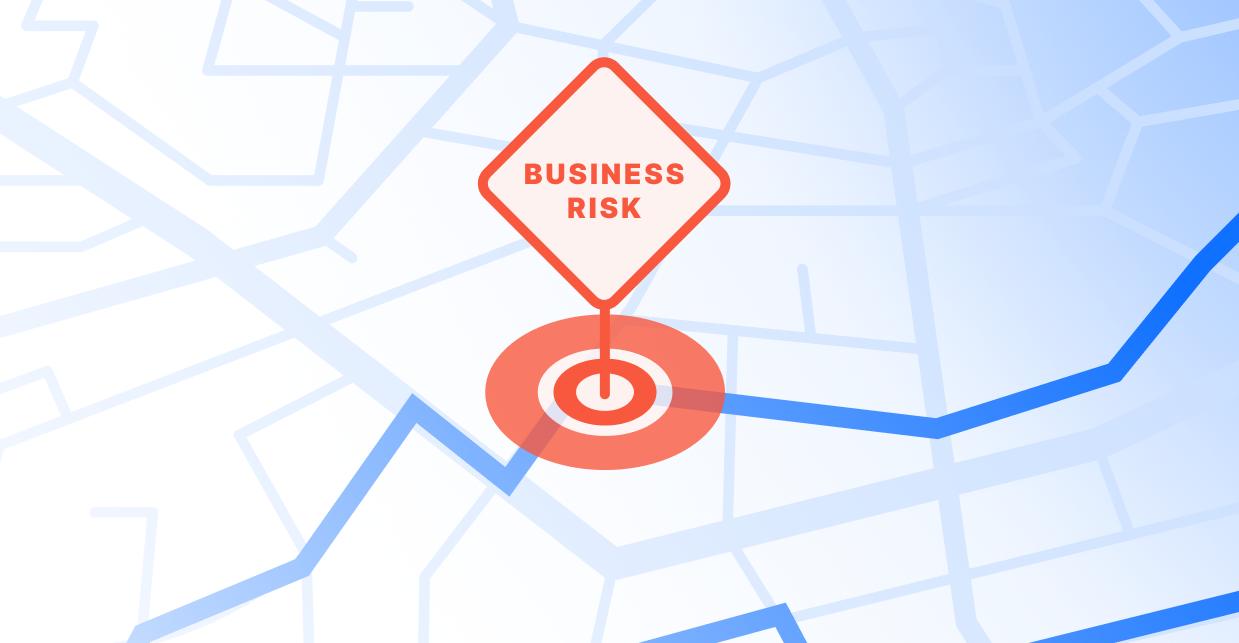
At the executive level, vulnerability management stops being a technical exercise and becomes a question of risk ownership, operational tradeoffs, and organizational accountability.
When a vulnerability leads to a breach, it has a personal effect on security leaders along with its broader organizational impact. According to Proofpoint’s Voice of the CISO Report, a majority of CISOs claim they are personally blamed ‘always or often’ when a breach occurs, even when defenses were in place.
In a breach, the question is rarely whether the backlog was zero. It is whether the organization can explain which risks it accepted, which it prioritized, and why.
Many vulnerability management programs have no shortage of data. Despite that, they struggle to consistently make defensible prioritization decisions. It’s not because they lack visibility; it’s because they can’t connect exploitability, asset context, ownership, and business impact fast enough to act.
They have a problem making prioritization decisions and orchestrating remediation across the enterprise. These gaps, not scanning, are where many programs break down and fail their organization.
If you can’t explain how a vulnerability impacts the business before a breach, you won’t be able to explain it afterward. Those CISOs who lead their teams to move beyond purely technical prioritization toward outcome-driven risk management find themselves in a stronger position to answer the board and other senior leaders when the post-breach questions inevitably start flowing in.
Raw vulnerability counts may help operational teams measure workloads, but executive leadership needs to understand exposure in terms of business disruption, resilience, and risk reduction over time. And they need to report that information, with proper context, to their boards of directors.
To make matters more complicated, remediation priorities in large enterprises often compete with operational uptime, application release schedules, and infrastructure constraints. Effective risk management requires negotiation and alignment across the business, not just security tooling.
Mapping vulnerabilities to business risk can be more complicated than it seems. Let’s take a closer look at the problem alongside some recommendations to make it happen.
Contextualizing Vulnerabilities to Business Assets and Processes
Mapping vulnerabilities to business impact begins by linking them to the assets that sustain core operations. Asset-to-business-value mapping connects servers, applications, and devices to their role in delivering business outcomes.
For example, a vulnerability on a payment processing server directly tied to customer revenue poses higher risk than the same flaw on a test environment. Context changes risk: the same technical defect can carry drastically different implications depending on the business process it supports.
To uncover true exposure, include process owners and cost metrics in vulnerability impact mapping. Security teams don’t own business impact. Process owners do. If they’re not part of making prioritization decisions, your risk model is incomplete.
One of the most common failure points in enterprise remediation programs is assuming security can unilaterally dictate priority without operational buy-in from the business units responsible for uptime, delivery, and revenue.
Prioritizing Risks by Exploitability and Attacker Behavior
Understanding attacker behavior as part of your decision-making process is one of the keys that’s often overlooked in prioritization and mapping exercises. It also uncovers more insights into a vulnerability’s exploitability, factoring in available exploit code, attack vectors, and active campaigns in the wild.
Some of the questions that come up when attempting to get into the mind of an attacker are hard to answer. Real-time threat intelligence on active exploits can help; intel paints a picture that shows which exploits attackers are actively targeting.
Don’t neglect business context here either. Possibly one of the most important flags on any identified exposure is whether it appears on a business-critical system. If you don’t think attackers understand which systems are vital to your business, and therefore are the most lucrative or damaging targets, you’re willfully operating at a disadvantage.
You can also place some consideration on remediation costs against potential business losses. This won’t necessarily give you insight into a potential attacker’s behavior, but it will provide a valuable measure for ongoing remediation decisions.
Translating Risk into Board-Level Metrics and Narratives
Communicating business risk demands translation from technical metrics to executive language. Alignment with your board is important but faltering today. According to Proofpoint’s report, boardroom alignment with CISOs decreased from 84% in 2024 to 64% in 2025.
Boards aren’t looking for technical exhaustiveness. They want clarity on business exposure, operational resilience, and if leadership is reducing material risk over time.
You can strengthen board alignment with financial and operational storytelling supported by hard data. This starts with learning to express vulnerabilities in terms of potential financial loss or cost avoidance. Consider incorporating progress via exposure reduction trends over time and link vulnerabilities to critical business processes and revenue streams.
Be sure to avoid leading with ‘volume’ metrics like raw vulnerability counts. They have their place, but only as supporting data points. Mature programs measure success by how quickly high-risk exposures are identified, owned, and remediated; not by how many vulnerabilities are closed.
For example, your security team flags an HR system that has an exploitable vulnerability. Rather than report the finding as one line item in a long list, enhance the finding with details like anticipated reputational damage, potential regulatory fines, and lost productivity in the event of a breach. Including these details reframes remediation as a business continuity investment, not a cost center.
In another scenario, a vulnerability shows up on an internet-facing payment service. After analysis, your team determines that the exploit code for the vulnerability is publicly available. Since this system is tied to revenue generation and no compensating controls exist, the vulnerability rises above merely ‘critical.’ It’s a business risk that should be escalated immediately, not queued for future action.
In one large enterprise deployment, shifting to intelligence-driven prioritization reduced manual triage effort by over 80% and cut high-risk vulnerabilities in half within the first three months.
The Continuous Cycle of Risk Management
Turning strategy into execution demands a pragmatic loop that keeps exposure management dynamic and measurable. No business process runs once. They require constant feedback and iteration.
Gartner’s Continuous Threat Exposure Management (CTEM) framework gives that loop a name and a structure, and its five stages are the business-risk method in practice. Scoping defines the business-critical attack surface. Discovery surfaces the vulnerabilities and the asset and ownership context around them. Prioritization ranks them by exploitability and business impact rather than raw severity. Validation confirms what is genuinely exploitable and where compensating controls already reduce the risk. Mobilization drives remediation to the owners accountable for uptime, delivery, and revenue.
Run continuously, this cycle demonstrates clear cause and effect. Each control implemented or exposure remediated produces measurable risk reduction, which is what lets you justify budget through outcomes instead of activity. CTEM is not a framework you align to after the fact. It is the operating model for risk-based exposure management, and it is the model the Nucleus Platform is built to run.
Aligning Vulnerability Management with Compliance Standards
Proactively mapping vulnerabilities to business impact carries the added benefit of satisfying compliance control requirements in many frameworks. Frameworks such as NIST, ISO 27001, and COBIT have updated control requirement language that requires organizations to manage risk systematically. Continuous validation under these frameworks transforms compliance from a checkbox exercise into meaningful oversight.
Connecting Vulnerabilities to Business Risk
Operationalizing this model at enterprise scale requires consistent correlation between vulnerability data, asset data, threat intelligence, ownership, and remediation workflows.
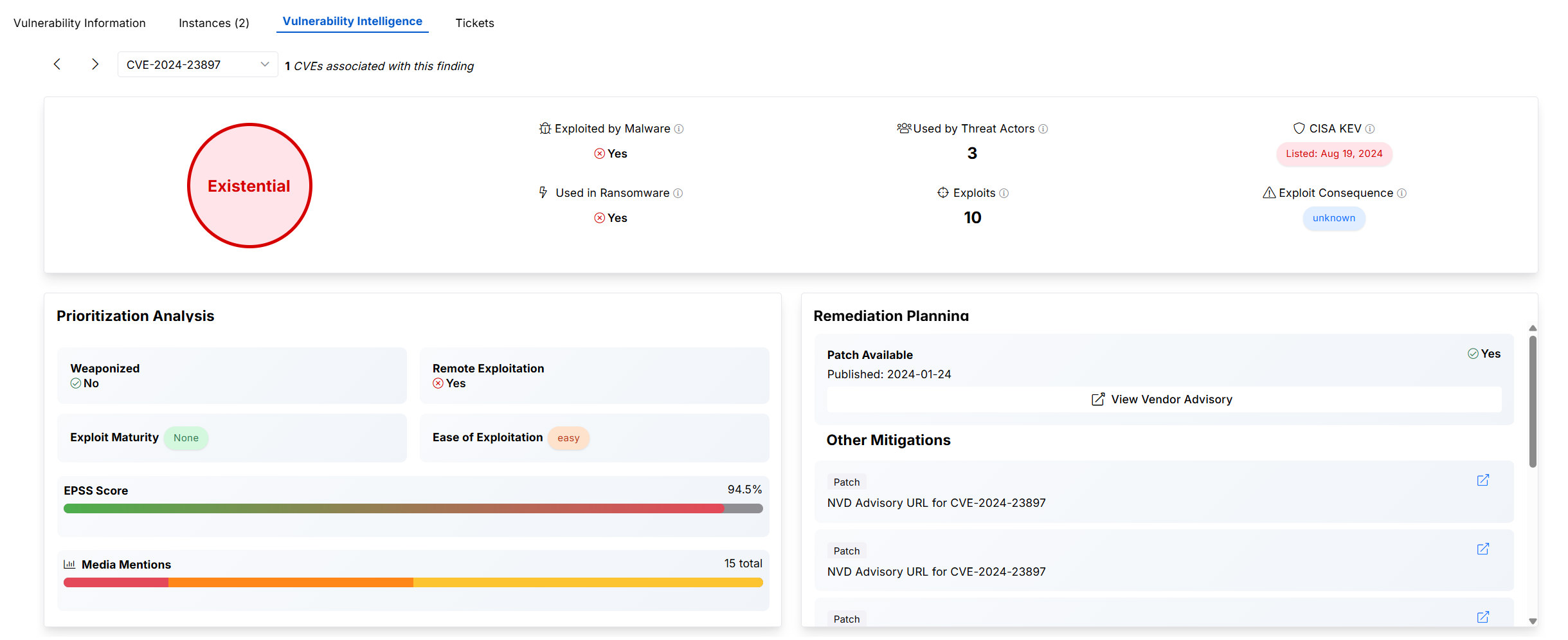
The Nucleus Platform connects vulnerabilities to business risk by correlating vulnerability, asset, and business data drawn from a broad set of integrations with security and other tools into the platform. This data is then enriched with exploit data, asset context, and threat intelligence to reduce noise. Using threat intelligence information found in Nucleus Insights, this enrichment is delivered automatically, combining vulnerability intelligence with real-world threat data for faster, evidence-based decisions.
At Nucleus, we apply this same model internally. Our vulnerability management program is built around the same principles we advocate for customers: aggregate the findings, enrich them with threat and asset context, assign clear ownership, apply risk-based SLAs, and keep the loop moving through remediation, acceptance, and monitoring. This same process helps us achieve many compliance control requirements, including FedRAMP.
That matters because security vendors don’t get a pass on operational discipline. If we’re asking our customers to move from volume-based vulnerability management to risk-based execution, we need to be willing to run our own program that way too.
In the end, most organizations don’t have a vulnerability visibility problem. They have a decision problem. The hardest part of modern vulnerability management isn’t finding exposures. It’s building a repeatable process for making risk decisions that the business can defend.
In the end, the maturity that matters isn’t how many vulnerabilities you close. It’s whether you’ve turned vulnerability management into a repeatable decision the business can defend, every time.

See Nucleus in Action
Discover how unified, risk-based automation can transform your vulnerability management.