












Nucleus Security Unveils Major Platform Innovation for Faster, Smarter AI-Driven Exposure Management
Nucleus 3.0 delivers AI-driven vulnerability intelligence, a unified query language, and enterprise-grade flexibility to accelerate vulnerability operations.
Nucleus Security, the leader in unified vulnerability and exposure management, today announced the conclusion of their winter 2025 customer launch week, with five product announcements, including the introduction of Nucleus 3.0, next-generation exposure management platform. With this launch, Nucleus is redefining innovation in exposure management to transform how teams reduce risk, measure progress, and respond to threats with speed at scale.
“For years, security teams have been drowning in vulnerability data but starving for outcomes. Nucleus 3.0 is the next generation of exposure management, not as a concept for the future, but as a reality for today. With these releases, we are delivering the advanced workflows the industry has been waiting for, empowering our customers to move beyond traditional VM and solve critical challenges right now,” said Scott Kuffer, Co-founder and Chief Product Officer.
As cloud computing, modern application development, and the proliferation of AI radically alter enterprise IT, Nucleus 3.0 is designed around three strategic pillars that define the next phase of enterprise exposure management.
Context: Nucleus unifies fragmented security data, business information, and AI-enriched threat intelligence into a single operational view and unified language, enabling teams to understand their risk, automate prioritized action, and communicate measurable outcomes regardless the size of the organization.
Speed: Nucleus slashes the time from question to risk reduction and real-time intelligence that turn raw data into instant answers and live collections, driving risk-prioritized action in seconds and accelerating remediation while minimizing exposure windows.
Flexibility: Designed to adapt to fit your organization and processes with custom risk models, role-based experiences, and modular workflows that align remediation with business priorities, giving every stakeholder, from developers to the CISO, risk clarity and focus.
New enhancements include:
Nucleus Query Language (NQL): Establishes a common language across the entire Nucleus Data Core including assets, business context, findings, threat intelligence, software stack, and more. With a single interface, NQL transforms fragmented data into contextual risk visibility for all consumers of Nucleus platform data. Armed with this knowledge, enterprise organizations can prioritize actions, accelerate remediation efforts, and mitigate the most significant business risks.
All Findings Page: The first NQL-powered UI page is “All Findings”, enabling users to ask any question across the entire Nucleus Data Core. This unified search, reporting, and visual experience transforms ad-hoc searches into living, governed data collections aligned to teams, roles, and business functions. Upcoming expansions of NQL findings, datasets, filters, and functions will unify compliance, resolved, and historical findings over time. This democratizes security data, allowing developers and executives to instantly query complex environments and build live, role-specific views that drive faster, more collaborative remediation.
Nucleus Model Context Protocol (MCP) Server: A governed AI framework that enables secure, auditable natural-language interactions and automation across exposure and risk. Allows teams to leverage the speed and ease of Generative AI safely, connected AI agents, and tools, while using the Nucleus Data Platform to analyze risks and automate workflows without sacrificing the data privacy, security, or auditability enterprises demand.
Customer Risk Score: Customers can now create or leverage their specific risk scoring algorithm from scratch. These scores can be fully operationalized in Nucleus’s dynamic automation engine. Upcoming Nucleus release will allow customers to apply their custom risk scores to vulnerability views by default. This cuts through the noise of generic alerts, enabling organizations to prioritize fixes based on their own business context and operational realities rather than conflicting vendor scores.
Nucleus Insights General Availability: Nucleus has entered the vulnerability intelligence space as a 1st party intelligence provider. With high-scale, operations-driven data aggregation capabilities, Nucleus Insights collects, curates, analyzes, and provides top-tier vulnerability intelligence. Leveraging AI-powered research, analyst algorithms, and proprietary validation technology, it delivers the highest quality real-time vulnerability intelligence. Direct integration into the Nucleus platform enables users to automate threat-informed action for over 300,000 CVEs to drive down risk effectively.
Analyst Insights
Michelle Abraham, Senior Research Director in IDC’s Security and Trust Group
“Enterprises are realizing that fragmented vulnerability management cannot support modern risk reduction goals. The next generation of exposure management must leverage intelligence, context, and automation in a single operational model that closes the gap between insight and action. With a unified risk language, Nucleus 3.0 advances organizations’ ability to respond with speed, precision, and measurable impact.”
Tyler Shields, Principal Analyst, Omdia
“As exposure management matures and AI agent adoption increases, context becomes the driving force behind meaningful risk reduction. It’s not enough to see more. Organizations need to understand in detail and act faster with context and precision. The next generation of exposure management platforms will be defined by their ability to operationalize context across fragmented data, automate decisions, and adapt to the unique nature of every enterprise. Nucleus 3.0 is driving towards this vision.”
Availability
The first foundation of the Nucleus 3.0 platform is available in preview to all customers today.
About Nucleus Security
Nucleus Security is the enterprise leader in unified vulnerability and exposure management, enabling organizations to prioritize and mitigate vulnerabilities faster, at scale. Delivering unmatched time to value, Nucleus automatically unifies and organizes data from all your security and business tools into a single pane of glass. With powerful dynamic automations, teams can effectively automate their vulnerability management program. As a FedRAMP authorized vendor, Nucleus Security is transforming how enterprises, federal agencies and defense contractors secure their digital assets and networks.
To learn more about Nucleus Security for Government, please visit: https://nucleussec.com/government/
For more information about Nucleus Security and its services, please visit: https://nucleussec.com/get-started/
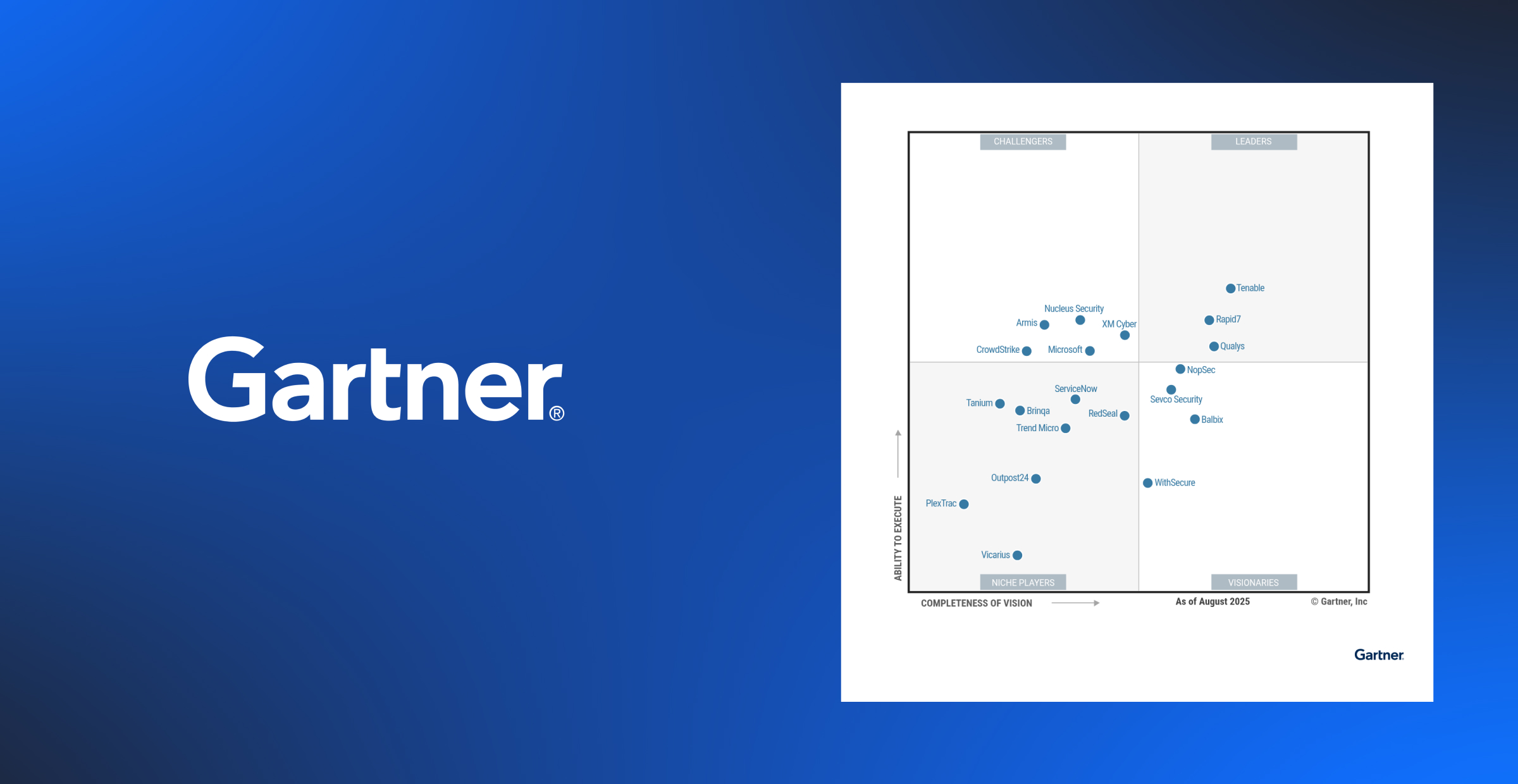
Magic Quadrant reports are a culmination of rigorous, fact-based research in specific markets, providing a wide-angle view of the relative positions of providers in markets where growth is high and provider differentiation is distinct. Providers are positioned into four quadrants: Leaders, Challengers, Visionaries and Niche Players. The research enables you to get the most from market analysis in alignment with your unique business and technology needs.
1. Source: Gartner, “Magic Quadrant for Exposure Assessment Platform,” Mitchell Schneider, Dhivya Poole, Jonathan Nunez, November 10, 2025
Gartner does not endorse any vendor, product or service depicted in our research publications, and does not advise technology users to select only those vendors with the highest ratings or other designation. Gartner research publications consist of the opinions of Gartner research organization and should not be construed as statements of fact. Gartner disclaims all warranties, expressed or implied, with respect to this research, including any warranties of merchantability or fitness for a particular purpose.
GARTNER is a registered trademark and service mark of Gartner, Inc. and/or its affiliates in the U.S. and internationally, and MAGIC QUADRANT is a registered trademark of Gartner, Inc. and/or its affiliates and are used herein with permission. All rights reserved.
See Nucleus in Action
Discover how unified, risk-based automation can transform your vulnerability management.