











Context-Driven Security: Connecting the Dots Across Code, Offensive Security, and Exposure Management
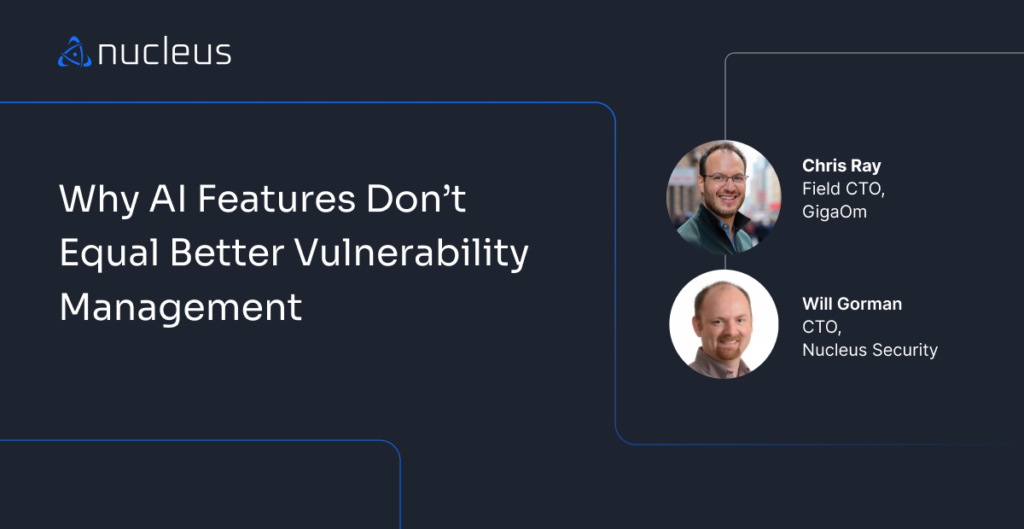
Security teams struggle because they can’t confidently determine what actually matters, not from a lack of vulnerability data. This webinar recording, part of Cycode’s Product Security Summit, explores validated vulnerability prioritization as the missing link between detection and action, especially as AI-driven attackers compress the time between discovery and exploitation. Leaders from Nucleus Security, Cycode, and HackerOne explain why static severity scores no longer reflect real-world risk and how organizations must shift toward prioritization grounded in validation and context.
As AI accelerates offensive security workflows, vulnerabilities that once appeared low or medium risk can now be chained into serious exploits in hours. The discussion highlights how attackers use automation to rapidly analyze code, identify edge cases, and combine otherwise minor issues into production-grade attacks. In this environment, validated vulnerability data represents proof that an issue is reachable and exploitable in your environment and becomes far more valuable than theoretical severity alone.
The panel digs into how adversarial validation and human-led testing cut through scanner noise to provide high-confidence signals. HackerOne shares how exploit validation delivers ground truth, while Nucleus demonstrates how correlating those signals with asset criticality and business context enables exposure management prioritization that security and engineering teams can trust. The result is a clear, defensible way to identify the small percentage of vulnerabilities that truly represent business risk.
How Validated Vulnerability Data Enables Better CTEM Prioritization
This approach directly supports CTEM prioritization, reframing exposure management as a continuous operating loop rather than a one-time assessment. By connecting validation, prioritization, and remediation, organizations move beyond backlog management toward measurable exposure reduction. The webinar includes a real-world example of a global enterprise dramatically reducing vulnerabilities by focusing on validated, high-impact exposures instead of chasing raw volume.
If you’re struggling to turn vulnerability findings into confident remediation decisions, this session offers a practical blueprint. Watch the recording to see how validated vulnerability prioritization helps security teams reduce noise, align with the business, and focus remediation efforts on what attackers can actually exploit, before they do.
Key Takeaways
- Why severity-based scoring fails without exploit validation and context
- How validated vulnerability data reveals which issues attackers can actually use
- What exposure management prioritization looks like in practice, not theory
- How CTEM prioritization connects validation, business context, and remediation
- How leading organizations reduce risk by focusing on the small percentage of truly critical exposures
Who Should Watch This Webinar
This session is especially valuable for:
- Vulnerability management and exposure management leaders
- Application security and product security teams
- Security architects evaluating CTEM programs
- CISOs and security leaders seeking defensible risk prioritization
- Teams overwhelmed by scanner noise and remediation backlogs